Procurement teams often judge hoses on purchase price alone. A stainless steel hose outlasts cheaper alternatives, reduces maintenance calls, and cuts the real cost of running industrial fluid transfer lines.
Key Takeaways:
- A stainless steel hose delivers far longer service life where corrosion and pressure degrade cheaper materials fast.
- Labour, fluid loss, and line stoppage time never appear on a purchase order but hit the maintenance budget hard.
- One emergency failure can halt downstream processes for hours. That cost rarely gets traced back to the hose spec.
- Stainless steel holds up against acids, solvents, and heat that quietly destroy rubber from the inside out.
- More operations managers now treat premium hose selection as a maintenance decision, not just a procurement one.
The real cost of a hose almost never appears on the first invoice. Most procurement teams find that out the hard way, usually after the line has gone down twice and the maintenance log is filling up with the same job. A stainless steel hose changes that picture, though the case for it only becomes obvious once someone adds up the full replacement trail.
Rubber hoses on demanding lines get replaced every couple of years at best. Some go sooner. A stainless steel hose takes acid exposure, steam, and constant mechanical abrasion without degrading the way softer materials do. No mid-shift patching. No unplanned shutdowns with a technician scrambling for stock. That time saving alone starts to close the price gap quickly.
What Procurement Teams Keep Getting Wrong
- The Price-Only Comparison: Per-unit cost is where most buying decisions for hoses start and stop. A lower figure on a purchase order looks efficient, and nobody questions it until the same line needs attention again six months later. The comparison never gets completed because the labour hours, the output lost during changeover, and the knock-on delays never make it back to the person placing the next order.
- The Hours Nobody Tracks: Maintenance teams log the work, but those records rarely reach the procurement department before the next reorder goes through. One failure on a chemical transfer line can pull output for several hours and back up everything connected to it. Do that three or four times across a year and the numbers become very hard to justify, especially when a better specification was available at the start.
Where Cheap Hoses Quietly Drain the Budget
- Labour, Leaks, and Lost Output: A hose that degrades fast does not only cost money at the point of failure. Each repair call pulls a technician away from something else, rarely at a good time in the shift. Fluid loss across several incidents builds up and goes unnoticed until a formal inspection. When a high-pressure line stops without warning, the downstream delay gets charged to production. The hose never takes the blame on paper.
- Warning Signs That the Current Hose Spend Is Higher Than the Invoice Shows:
- Replacements on the same line happen more than twice a year.
- Technicians spending shift hours on patches rather than completing scheduled maintenance work.
- Fluid loss at connection points going unrecorded between formal site inspections.
- Shutdowns are treated as routine rather than failures worth investigating.
- The same hose spec gets reordered without anyone reviewing what the total annual spend actually came to.
Why Stainless Steel Holds Where Others Give Out
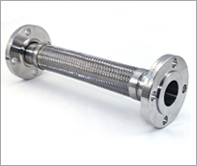
- Pressure Cycling and Thermal Load: Rubber hoses under sustained pressure cycling or heat do not always show signs of trouble before they go bad. The wall softens, the integrity drops, and then the line stops. Corrugated stainless steel construction works differently. It keeps the hose flexible without thinning the wall, so repeated pressure spikes and thermal shifts get absorbed rather than transmitted into cracks. Service life extends well past what any rubber alternative can deliver in the same conditions.
- Chemical Resistance That Rubber Cannot Match: Acids, solvents, and caustic process fluids break down rubber from the inside. By the time the damage is visible externally, the hose wall has already been compromised for some time. 316L stainless steel does not react with the broad range of chemicals moving through industrial transfer lines. That is why it is the specification used across petrochemical, pharmaceutical, and food-grade applications where internal material integrity is non-negotiable, not just preferred.
The Operational Case for Specifying Premium
- When Maintenance Budgets Absorb What Purchase Orders Miss: Facilities that track total cost of ownership across lines using hoses find the actual spend per metre runs two to three times higher than the original purchase figure. Labour costs, consumable spend, and lost output time never appear on that first order. Moving to a higher-specification hose assembly changes that ratio, and does it quickly.
- How Buyer Thinking Has Shifted: More operations managers now treat premium hose selection as part of a maintenance reduction strategy, not a reactive component decision. That shift comes from recognising that unplanned downtime costs more than a higher upfront specification. Facilities that make the change early report fewer emergency callouts and more predictable maintenance cycles. The logic is clear once full replacement costs are on the table.
Stop Replacing. Start Specifying.
The cost argument gets clearest right after a facility totals its hose replacement spend for the year. Procurement teams that track maintenance hours, fluid loss, and stoppage frequency rarely need convincing twice. For applications requiring long service intervals and reliable fluid transfer, contact a specialist today to identify the right stainless steel specification and break the cycle of reactive replacements


Leave a Reply