Demanding plants punish weak hose assemblies through pressure spikes, constant flexing and aggressive fluids. Eaton hoses are specified around those variables, which is why construction, reinforcement and correct sizing decide whether a line survives its shift or closes down.
Key Takeaways
- Eaton hoses suit plants where pressure spikes and abrasion decide service life.
- Reinforcement type sets the pressure band a line can actually hold.
- The cover compound decides how long a dragged hose lasts.
- Liner compatibility protects the tube from the inside, where nobody inspects.
- Specification by duty beats matching by diameter.
Industrial hose lines rarely fail without warning. Something usually gives first, and it is the part nobody inspected. Plants running pressure surges, tight bend radii and abrasive contact wear assemblies down faster than maintenance schedules assume. Eaton hoses hold up better in that setting because the specification starts with the working conditions, not the catalogue photograph.
Cost pressure pushes buyers towards whatever fits the fitting and the budget. That decision gets expensive when a line ruptures mid-shift and takes production with it. Eaton hoses cover a wide span of pressure ratings and bore sizes, so the assembly can be matched to real duty rather than a rough guess about application category.
Where Hose Lines Quietly Take a Beating
- Pressure Cycling That Never Really Stops: Hydraulic circuits swing between load and rest thousands of times a day. Each cycle stretches the reinforcement slightly, then releases it. Rated working pressure only tells part of the story, because surge spikes above that figure quietly shorten service life long before any visible damage appears on the cover.
- Abrasion Working from the Outside In: Hoses dragged across concrete, rubbed against steelwork or bundled too tightly lose cover material first. Nothing dramatic happens at that stage. Once the reinforcement sits exposed, moisture reaches the wire and corrosion starts, which is how a hose fails weeks after the actual damage occurred.
- Fluids That Attack the Liner First: Mineral oils, water glycol blends, solvents and hot air all behave differently inside a tube. A liner suited to one can soften or swell in another. Compatibility charts exist for good reason, and ignoring them shifts the failure point inside the hose where inspection cannot reach it.
Construction Carries the Load, Not the Colour
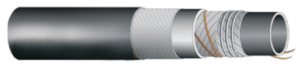
- Reinforcement Layers Carrying the Real Load: Braided wire, spiral wire and textile plies each suit a different pressure band and flex pattern. Spiral construction handles high pressure and impulse duty. Braid gives easier routing in tight spaces. Choosing on price alone usually means one of those properties gets sacrificed without anyone noticing.
- Cover Compounds Facing the Rough Work: Abrasion-resistant covers extend life in dragging applications by a factor most plants underestimate. Heat, ozone and oil mist also degrade the outer layer over time. Where hoses run near hot surfaces or move constantly, cover specification matters as much as the burst rating printed on the layline.
Matching the Range to the Duty on Site
- Pressure Bands Mapped to Application Needs: The Eaton hoses range is organised around distinct pressure classes, bore sizes and fluid groups, which makes narrowing options quicker for engineers working to a spec sheet. Low-pressure return lines and high-impulse circuits sit in separate families for that reason. Guesswork drops away once the duty is written down.
- Specification Beats Appearance Every Time: Two hoses of identical diameter and similar cover finish can carry entirely different ratings. Buyers who order by look end up with an assembly that passes installation and fails under load. Checking the printed details against the actual duty takes minutes and saves a shutdown.
Details worth confirming before any order goes out:
- Working pressure and expected surge peaks, checked against the circuit rather than the pump label.
- Bend radius at the tightest point of the route.
- Fluid type, including temperature at the hose and not at the reservoir.
- Abrasion exposure, which decides whether a standard cover is enough.
- Fitting compatibility. Mismatched ends cause more leaks than tube failure does.
Turning a Weak Link into a Reliable One
Downtime costs more than the assembly that caused it, and that math rarely gets calculated until the line is already down. Plants that specify hoses against measured conditions replace fewer of them. Anyone reviewing a hose schedule this quarter should speak with an experienced hose and coupling supplier before the next failure sets the timetable.


Leave a Reply