

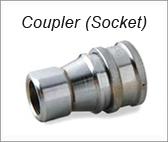
Industrial operations demand connections that won’t fail when pressure mounts and conditions turn harsh. The camlock coupling stands as a proven solution, engineered to deliver consistent performance across demanding applications. These mechanical marvels continue operating reliably, even when lesser connections buckle under stress and heat.
Quality engineering separates professional-grade camlock coupling systems from cheaper alternatives that can compromise operational integrity. The difference becomes apparent when examining construction materials, design philosophy, and real-world performance metrics. Industries relying on fluid transfer cannot afford connection failures that might halt production lines.
Corrosion-Resistant Materials That Endure
- Premium Stainless Steel Construction: Stainless steel variants offer exceptional resistance to chemical corrosion, making them ideal for pharmaceutical and food processing applications. The chromium content creates a protective oxide layer that self-repairs when damaged. This natural barrier prevents rust formation even in moisture-rich environments.
- Brass Components for Versatility: Brass alternatives provide excellent conductivity properties combined with antimicrobial characteristics that naturally resist bacterial growth. The zinc-copper alloy maintains structural integrity across temperature fluctuations common in industrial settings. Cost-conscious operations often favour brass options without sacrificing connection reliability.
- Aluminium Options for Weight-Critical Applications: Aerospace and portable equipment applications benefit from aluminium’s lightweight properties combined with adequate strength characteristics. The material resists oxidation through natural patina formation that protects underlying metal structures. Weight reduction translates directly into operational efficiency gains across mobile applications.
Thread-Free Design Philosophy
- Simplified Connection Mechanics: The absence of threading eliminates cross-threading risks that plague traditional pipe connections during high-pressure installation scenarios. Workers achieve secure connections through lever-actuated cam mechanisms that require minimal technical training. This simplicity reduces installation errors that could compromise system integrity.
- Reduced Wear Points: Thread-free operation eliminates metal-on-metal grinding that gradually degrades connection surfaces over repeated use cycles. The cam lever design distributes clamping forces evenly across gasket surfaces, preventing localised stress concentrations. This engineering approach extends service life significantly compared to threaded alternatives.
- Quick disconnection capabilities reduce downtime during maintenance procedures
- Standardised dimensions ensure compatibility across different manufacturer products
- Visual connection confirmation prevents incomplete coupling scenarios
- Tool-free operation enables rapid field modifications
Leak-Proof Performance Under Pressure
- Pressure Rating Superiority: Quality gasket materials maintain sealing integrity across pressure ranges that exceed typical industrial requirements by substantial safety margins. The mechanical clamping action creates consistent compression forces that adapt to thermal expansion cycles. Pressure testing validates performance claims before products reach industrial applications.
- Temperature Stability: Gasket compounds resist degradation across temperature extremes encountered in steam, refrigeration, and chemical processing applications. Material selection considers thermal cycling effects that cause inferior seals to crack or lose elasticity. Temperature-resistant formulations maintain flexibility across operational ranges without hardening or softening.
- Multi-Application Versatility: The same coupling design handles diverse fluid types from water and oils to aggressive chemicals without requiring specialised variants. Gasket material selection determines chemical compatibility rather than coupling body modifications. This standardisation reduces inventory requirements for maintenance departments.
Field Performance Advantages
- Contamination Resistance: Open cam lever design allows debris removal through simple cleaning procedures that don’t require disassembly or special tools. Dirt accumulation doesn’t prevent proper connection formation unlike threaded systems that bind when contaminated. Field maintenance becomes straightforward even in harsh environmental conditions.
- Visual Inspection Benefits: External cam positioning provides immediate visual confirmation of proper coupling engagement that prevents accidental disconnections. Maintenance personnel can quickly assess connection status during routine inspections without testing procedures. This transparency improves safety protocols across industrial operations.
Conclusion
The camlock coupling represents proven engineering that prioritises durability over short-term cost savings in industrial fluid transfer applications. Quality materials, simplified mechanics, and pressure-tested performance deliver reliability that keeps operations running smoothly. These connections continue performing when cheaper alternatives fail, protecting both equipment and productivity. Don’t compromise your system’s integrity with inferior connections that could cost far more than the initial savings when failures occur.


Leave a Reply